



UK & Commonwealth (Pushkin), USA & Canada (New Directions), France (Ypsilon), Italy (Nottetempo), Netherlands (Meridiaan), Denmark (Palomar), Sweden (Pequod), Korea (Mujintree), Poland (Ha!art), Greece (Antipodes)
The stunning new work by the author of An Inventory of Losses
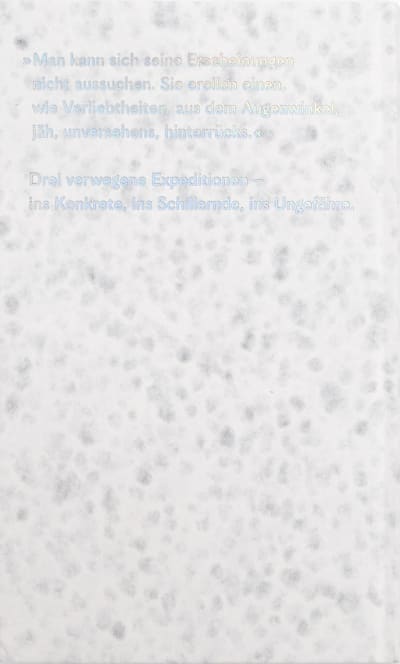
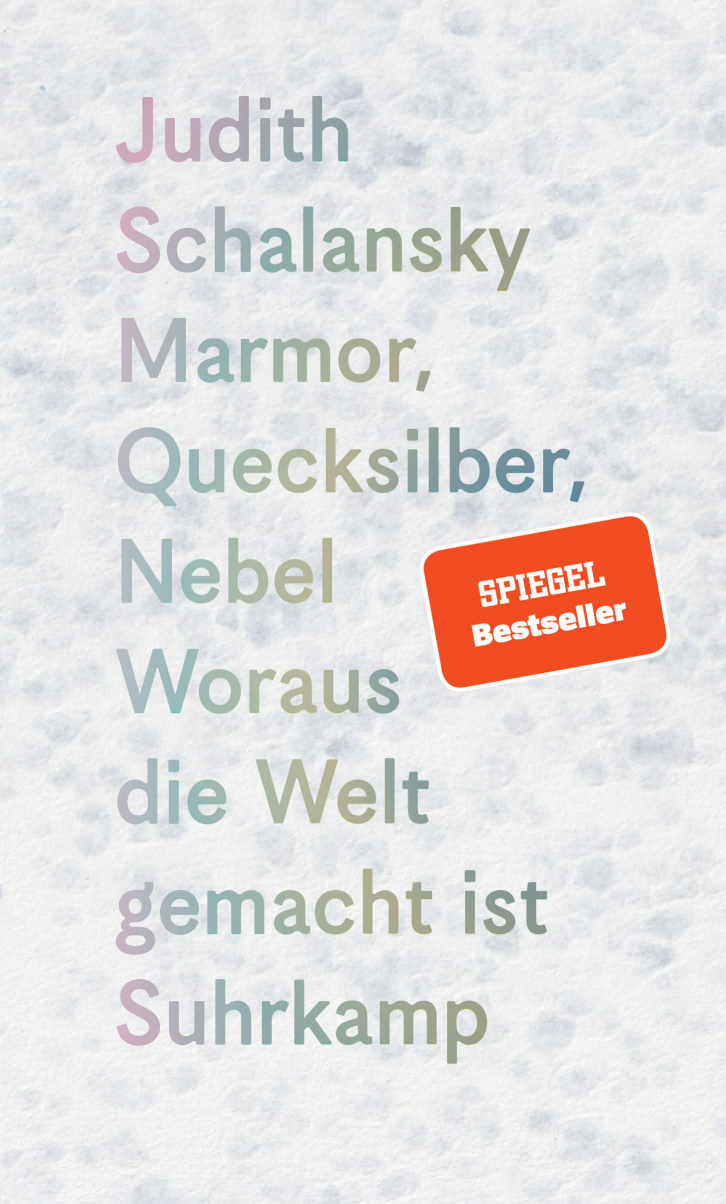
A Spiegel bestsellerIt begins not with the white of a blank piece of paper but of a block of stone, a 17-tonne monster of solid marble. Months after a fateful encounter with this stone on a ferry off the coast of the island of Thassos, Judith Schalansky finds herself unable to forget it, following it down a snow-white trail towards a marble quarry and a sculptor’s studio, through the dark, often violent history of resource extraction and of appropriating the world. A workshop at the Art Academy of Guadalajara...
It begins not with the white of a blank piece of paper but of a block of stone, a 17-tonne monster of solid marble. Months after a fateful encounter with this stone on a ferry off the coast of the island of Thassos, Judith Schalansky finds herself unable to forget it, following it down a snow-white trail towards a marble quarry and a sculptor’s studio, through the dark, often violent history of resource extraction and of appropriating the world. A workshop at the Art Academy of Guadalajara turns into a daring and mercurial performance as an apologist for the culture of the book. And the reconstruction of a bygone ascent of the usually mist-shrouded Brocken mountain crystallises into an encyclopaedia of intransparency that seeks the illuminating in the uncertain.
As always with Judith Schalansky, this new book leaves no stone unturned: it explores the nutritional value of marble pigs, the weight of the Earth, the layout of Noah’s Arc, the authenticity of Lucha libre wrestling, and spectral illusions created in mountain mist – phenomena in which the eeriness and unruliness of reality are reflected and refracted. Her three texts – full of twists and turns that take them back and forth between essay and narrative – explore with playful precision the material conditions of life, of literature, and ultimately, of the author’s own writing.
»›Only this much is clear‹, [Schalansky writes], ›in the beginning was not the word, nor light, but mist‹. Hissing vapour. Rarely has it been more beautifully condensed into literature than by Judith Schalansky.« Paul Jandl, Neue Zürcher Zeitung
»A stunning, enchanting book, which makes you happier and smarter.« Katharina Stegelmann, DER SPIEGEL
»The longer you follow Schalansky‘s sentences, the more palpably you sense their impressive rhythm, you admire the movements of her thought and her language, without ever getting the feeling that everything evaporates into mere understanding. … A brilliant book.« Nico Bleutge, Frankfurter Allgemeine Zeitung
»What is nature? And how can you write about it? Judith Schalansky provides a prime example here.« Michael Pilz, WELT AM SONNTAG
»Judith Schalansky has written a focused and at the same time light book about how texts arrive at their material. …. This author masters the art of the precise digression. … Going along for the ride is an utter joy.« Beate Meierfrankenfeld, Bayerischer Rundfunk
»This is nature writing without idealising it and prettying it up into precise, poetic images.« René Zipperlen, Badische Zeitung
»Schalansky is a woman of many talents.« SWR
»Impressive. ... Everything is connected with everything else, and you close the covers of this book with this thought in mind, perhaps a little exhausted from so much knowledge and so many realisations.« NDR
»Schalansky turns reams of notes and library catalogues into fantastic prose that balances at the margins of non-fiction and poetry, fact and fiction, enlightenment and myth.« Gerrit Althüser, literaturkritik.de
»If you love an adventure and want to set off into unfamiliar lands, you can find plenty to please you here.« Jörg Magenau, rbb
»›Only this much is clear‹, [Schalansky writes], ›in the beginning was not the word, nor light, but mist‹....
Persons
Judith Schalansky
Judith Schalansky, born in Greifswald in 1980, lives in Berlin where she works as a writer, editor and book designer. Her work has been translated into more than twenty languages and has won several prizes. Verzeichnis einiger Verluste received the Premio Strega Internazionale 2020 and was longlisted for the 2021 International Booker Prize and the Europese Literatuurprijs 2021.
Judith Schalansky, born in Greifswald in 1980, lives in Berlin where she works as a writer, editor and book designer. Her work has been translated...
OTHER PUBLICATIONS

An Inventory of Losses
»There are no gains without corresponding losses, no losses without corresponding gains.« Agnes Heller
»Western man’s inclination to value what is extinct more than what still exists...
USA & Canada (New Directions), UK & Commonwealth (MacLehose Press), Spanish world rights (Acantilado), Catalan rights (Mès llibres), Chinese simplex rights (China CITIC Press / Sight), Chinese complex rights (Locus), Russia (Ad Marginem), Brazilian Portuguese rights (Todavia), Portuguese rights (Elsinore), Arabic world rights (Kalima), France (Ypsilon Éditeur), Italy (Nottetempo), Netherlands (Meridiaan), Denmark (Palomar), Sweden (Pequod Press), Norway (Forlaget Press), Finland (Osuuskunta Poesia), Korea (Mujintree), Japan (Kawade), Thailand (Gamme Magie Editions), Indonesia (Yayasan Pustaka Obor), Poland (Ha!Art), Hungary (Corvina), Bulgaria (Paradox), Croatia (Mizantrop), Serbia (Dereta), Turkey (CAN), Greece (Antipodes)
Domestic Rights Sales: German Audiobook (DAV)
Previously published in the respective language/territory; rights available again: Romania (Trei), Mongolia (Monsudar)
The Giraffe's Neck
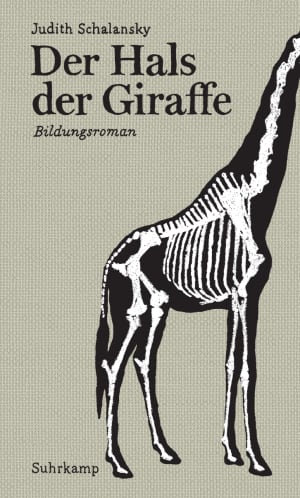
Three days in the life of a biology teacher – the last of her kind, a relic of...
English world rights (Bloomsbury), Spanish world rights (Random House Mondadori), Chinese simplex rights (People's Literature Publishing House), Russia (Text), Portuguese rights (Elsinore), France (Ypsilon), Italy (nottetempo), Netherlands (Meridiaan), Denmark (Vandkunsten), Sweden (Pequod Press), Norway (Press), Finland (Tammi), Korea (Galmuri), Japan (Kawade), Poland (Ha!Art), Hungary (Typotex), Bulgaria (Geia-Libris), Romania (Allfa), Estonia (Tänapäev), Bosnia (Imprimatur), Turkey (Ayrinti), Albanian (Pema)
Previously published in the respective language / territory; rights available again: Chinese complex rights (Locus), Brazilian Portuguese rights (Objetiva), Czech Republic (Paseka), Macedonia (Blesok)
Domestic Rights Sales: German Audiobook (DAV), German Book Club (Büchergilde Gutenberg), German Radio Play (SWR), German Stage Adaptations (Schauspiel Frankfurt - also performed at various other German Theatres; Maxim Gorki Theatre Berlin)