


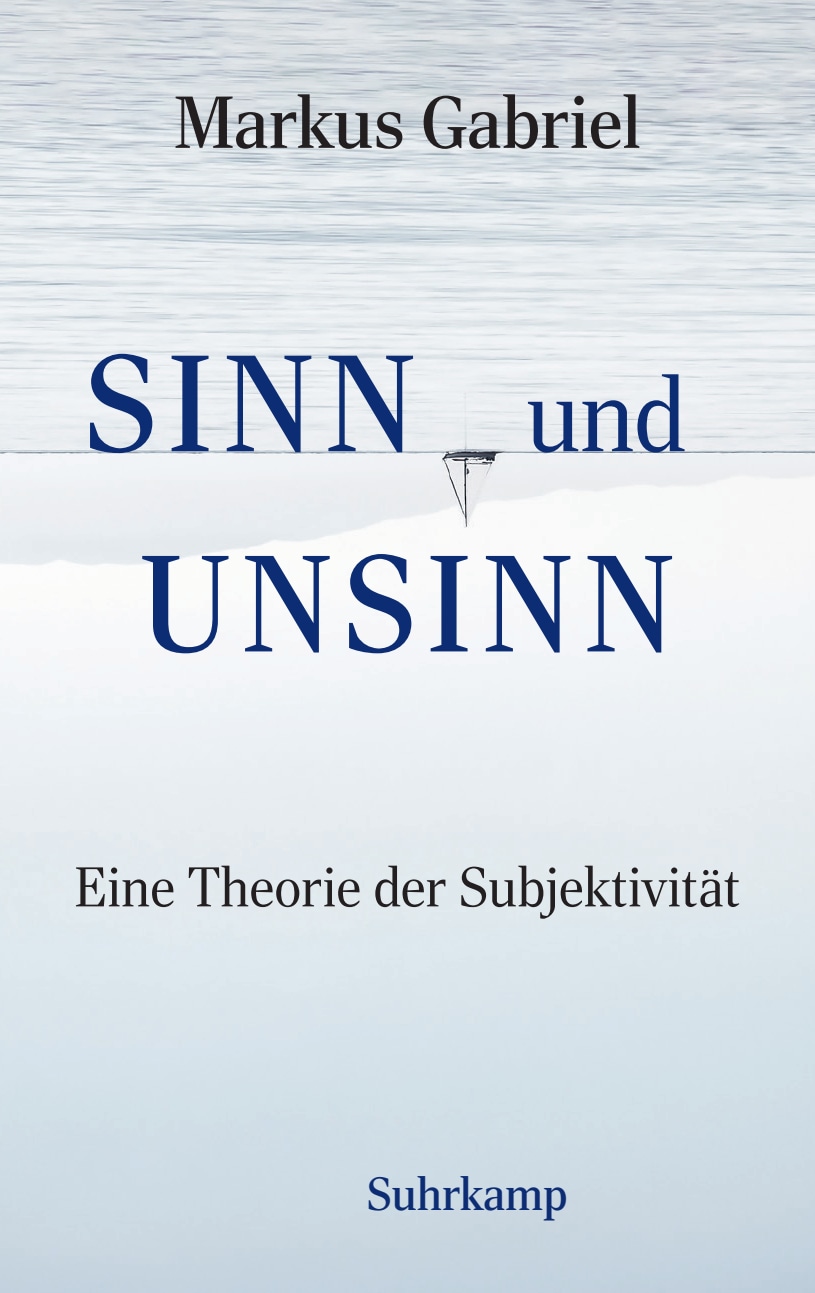
Markus Gabriel underpins this with a novel depiction of the relationship between sense, non-sense, and subjectivity. While subjectivity is usually theorised as a conscious representation of the self and unerring control over our thinking, it actually deals with the ancient Platonic challenge of attempting to understand the very situations in which we cannot really grasp reality. As such, Gabriel complements his new realism with an exciting perspective of epistemic failure, discussing fundamental ontological questions in an age in which the boundaries between the real and deception are growing increasingly blurry.
Persons
Markus Gabriel
Markus Gabriel, born in 1980, is professor of Philosophy at the University of Bonn, where, together with Michael Forster, he directs the International Center for Philosophy.
Markus Gabriel, born in 1980, is professor of Philosophy at the University of Bonn, where, together with Michael Forster, he directs the...
OTHER PUBLICATIONS

Fictions
English world rights (Polity), Spain & Mexico (Materia Oscura), Argentina (Universidad Nacional de General San Martín), France (Vrin), Korea (The Open Books), Turkey (Ketebe)
Mind and Existence
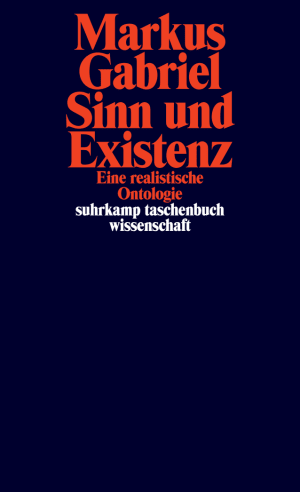
Since Kant and Frege, contemporary ontology has assumed that there is no (common) property to existence. In this way the old question as to the meaning of being had been reformulated in a...
Spanish world rights (Herder), Chinese simplex rights (Chongqing Publishing House), Japan (Horinouchi Shuppan)

Scepticism and Idealism in Antiquity
By now it is considered a fact that modern epistemology discovered the problem of solipsism, whereas classical philosophy, being based on a »healthy« realism, is assumed to never have doubted the existence of a non-mental environment. This assumption is wrong, as Markus Gabriel proves in this groundbreaking study.
His hypothesis is that classical scepticism...