English world rights (FSG), Spanish world rights (Alianza), Catalan rights (Alianza), France (Gallimard), Italy (Guanda), Sweden (Faethon), Norway (Pelikanen), Finland (Lurra), Poland (Eperons Ostrogi), Serbia (Laguna), Slovenia (Beletrina), Greece (Kritiki)
»There is a story in my life that I have never told anyone.«
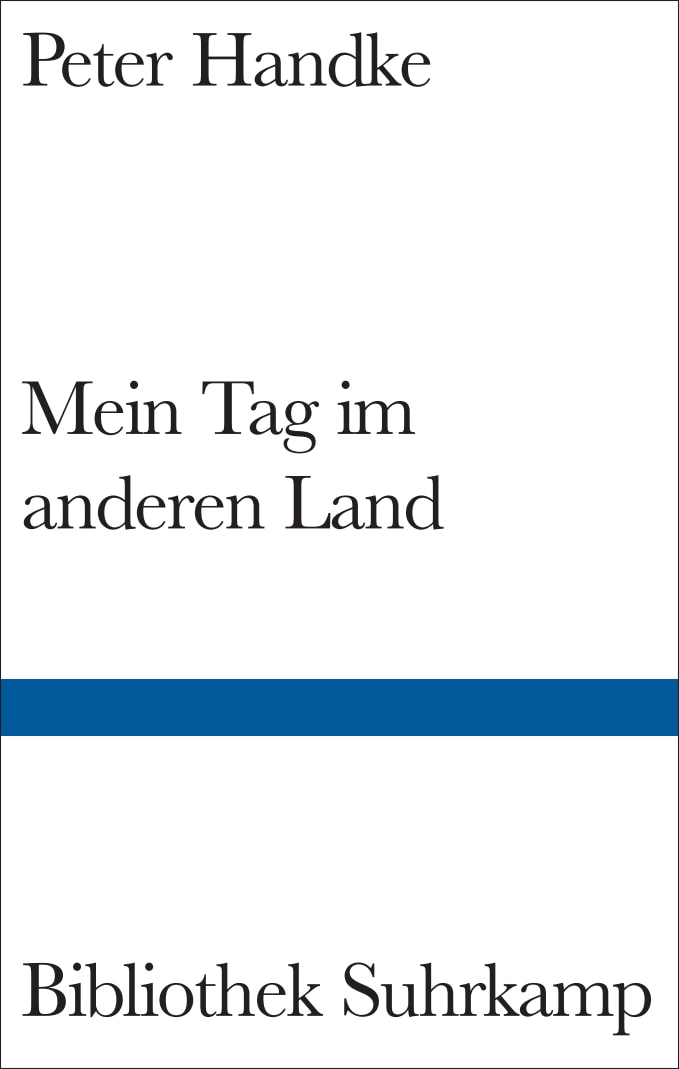
His surroundings see him as a man possessed, »possessed not just by one, but by several, many, even countless demons«. During the day, he, a fruit grower by profession, walks through the village. Quietly he speaks in tongues, a non-existent language, scares the villagers with insults and abuse, with prophesies.
Only his sister stands by him, their parents died a long time ago. She observes him talking to other living beings, animals, and refuses to acknowledge that he sings with...
His surroundings see him as a man possessed, »possessed not just by one, but by several, many, even countless demons«. During the day, he, a fruit grower by profession, walks through the village. Quietly he speaks in tongues, a non-existent language, scares the villagers with insults and abuse, with prophesies.
Only his sister stands by him, their parents died a long time ago. She observes him talking to other living beings, animals, and refuses to acknowledge that he sings with the voice of an angel. She follows him, to the lake »with the other country at the opposite bank« – that’s where a man looks at him like »he has never been looked at by anyone before« and that’s when the demons leave his body. After that, he sets out »after a long-drawn-out goodbye, of course, on the journey to the other country across the lake«.
Peter Handke writes about demons that lose their scariness through the gaze of the one who says: »There you are again, my friend!« In that very moment in which the possessed is as he was. He talks about a poetic transformation, a liberation that retains the »ineradicable resistance« aside from the harmonies; for: »Nothing becomes without it. Without it there is nothing but being, being there, and perpetually inanimate existence.«
»My Day in the Other Country is incredibly comical in its reversal of the circumstances and the self-mockery of the figure of the poet.« Paul Jandl, Neue Zürcher Zeitung
»My Day in the Other Country is certainly a testimony to the refreshed joie de vivre of its author. And maybe also a testimony of liberation.« Mladen Gladic, Die literarische Welt
»[There are many] observations that impressively represent Handke's mastrey of description.« Cornelia Geissler, Berliner Zeitung
»The birth of a poet from the spirit of possession ...« Frank Hertweck, SWR
»The story develops a pull, the seemingly eccentric [...] becomes almost physical and one cannot read enough of it.« Lothar Struck, Glanz & Elend
»My Day in the Other Country is incredibly comical in its reversal of the circumstances and the self-mockery of the figure of the poet.« Paul Jandl, Neue Zürcher Zeitung
»My Day in the Other Country is...