


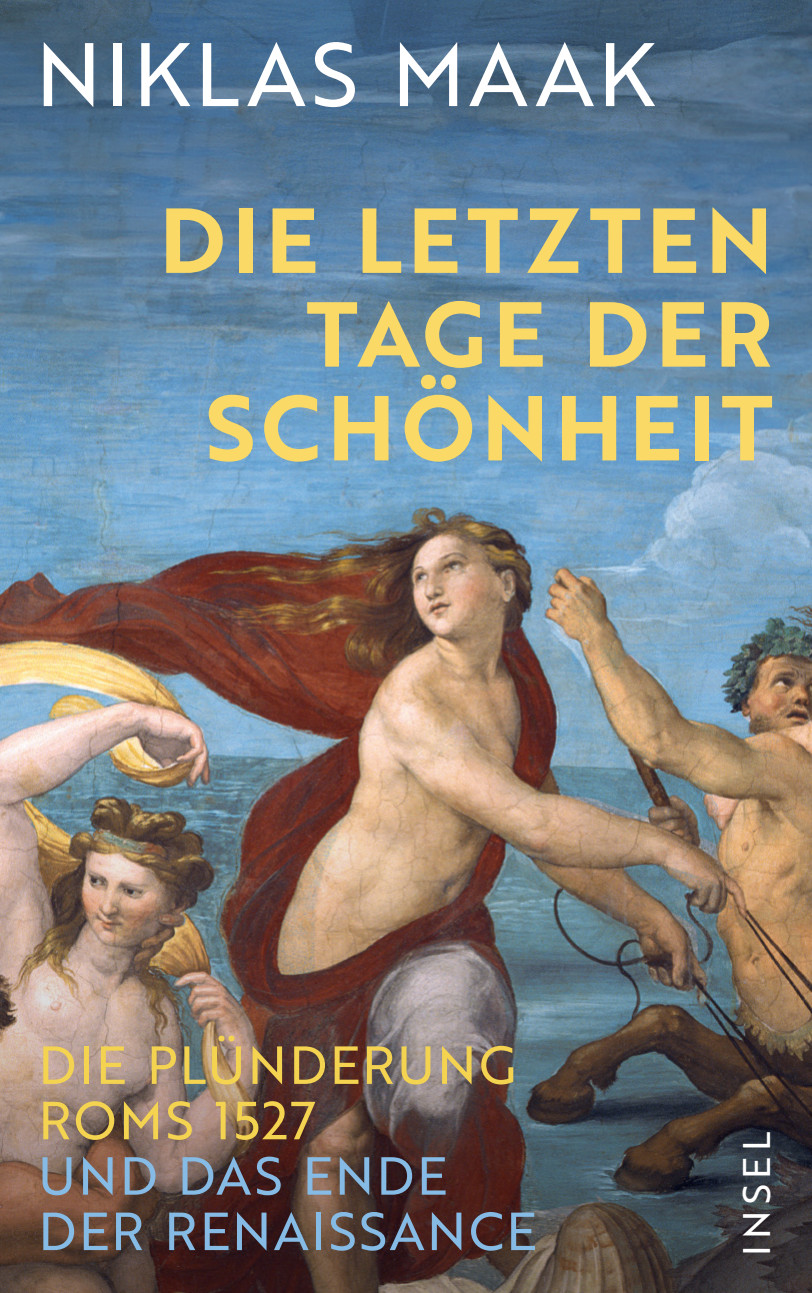
The Last Days of Beauty / Die letzten Tage der Schönheit
The Sack of Rome of 1527 and the End of the Renaissance
A brilliant introduction to the Renaissance through the lens of the Sack of Rome – which will have its 500th anniversary in 2027
Selected for New Books in German – translation funding guaranteed for the English language
At the highpoint of the Renaissance, Rome was the centre of the Western world. The Sack of Rome on 6 May 1527 marked the end of this epoch. Charles V’s soldiers stormed the walls of the city of Rome, enacting scenes of carnage unlike any other in the history of the city. The German Landsknechte laid waste to the city, Pope Clement VII was taken prisoner, the water supply destroyed, and the plague broke out. The bright skies of the Renaissance grew heavy, ushering in a dark new...
Read more
At the highpoint of the Renaissance, Rome was the centre of the Western world. The Sack of Rome on 6 May 1527 marked the end of this epoch. Charles V’s soldiers stormed the walls of the city of Rome, enacting scenes of carnage unlike any other in the history of the city. The German Landsknechte laid waste to the city, Pope Clement VII was taken prisoner, the water supply destroyed, and the plague broke out. The bright skies of the Renaissance grew heavy, ushering in a dark new era.
Niklas Maak tells the story of the Renaissance from the perspective of its final untroubled moment and its sudden end. He takes us into the workshops of Michelangelo and Parmigianino, onto the battlefields, into the palaces of bankers and popes – and of the »Prima Donna del Mondo«, the fascinating Isabella d’Este.
The author shows how fragile this thing we call culture is, and how quickly disinformation and imprudent politics can lead to the end of freedom. And how was it possible for the Sack of Rome to occur in the first place? An event that nobody expected, and which in many respects is reminiscent of the escalation of current religious, ideological, and military crises.
Niklas Maak tells the story of the Renaissance from the perspective of its final untroubled moment and its sudden end. He takes us into the workshops of Michelangelo and Parmigianino, onto the battlefields, into the palaces of bankers and popes – and of the »Prima Donna del Mondo«, the fascinating Isabella d’Este.
The author shows how fragile this thing we call culture is, and how quickly disinformation and imprudent politics can lead to the end of freedom. And how was it possible for the Sack of Rome to occur in the first place? An event that nobody expected, and which in many respects is reminiscent of the escalation of current religious, ideological, and military crises.
»What a brilliant idea, telling the story of the Rome’s most illustrious era starting from its wild end. Together with Niklas Maak, we delve deep into the unique and heady rush of the Renaissance, we see its colours, smell its scents, understand its dreams and witness its battles. This book opens our eyes in a captivating fashion – and in doing so, it expands our sensibility for one of the most beautiful eras in the history of humanity.» Florian Illies
»What a brilliant idea, telling the story of the Rome’s most illustrious era starting from its wild end. Together with Niklas Maak, we delve deep into the unique and heady rush of the Renaissance, we see its colours, smell its scents, understand its dreams and witness its battles. This book opens our eyes in a captivating fashion – and in doing so, it expands our sensibility for one of the most beautiful eras in the history of humanity.» Florian Illies
2026, 252 pages
Persons
Niklas Maak
Author
Niklas Maak was born in 1972 in Hamburg, where he studied art history under the Renaissance experts Martin Warnke and Andreas Beyer, before studying philosophy in Paris at the École des hautes études en sciences sociales. He completed his PhD in 1998. From 1999 to 2001, Maak was an editor for art and architecture and a columnist for the Süddeutsche Zeitung. Since 2001, he has been a feature writer for the Frankfurter Allgemeine Zeitung. Maak also writes for publications such as The New York Times and Harvard Design Magazine. He is the recipient of the Egon Erwin Kish Prize and a former fellow at Villa Massimo in Rome and the Wissenschaftskolleg zu Berlin.
Niklas Maak
Author
Niklas Maak was born in 1972 in Hamburg, where he studied art history under the Renaissance experts Martin Warnke and Andreas Beyer, before studying...
© Alberto Novelli