


»An extensive scene«, a public place, »definitely not a free space«; possibly in the Spanish province of Avila or in Humpolec in Bohemia, now or at another time. A narrator who is one of »us« describes the place and time of the play that is to come. The actors are those left over from an originally densely populated scene: locals, newcomers, residents, foreigners, the young, the old, perhaps the last guests of a party. The drama – which they present over the course of an evening, and...
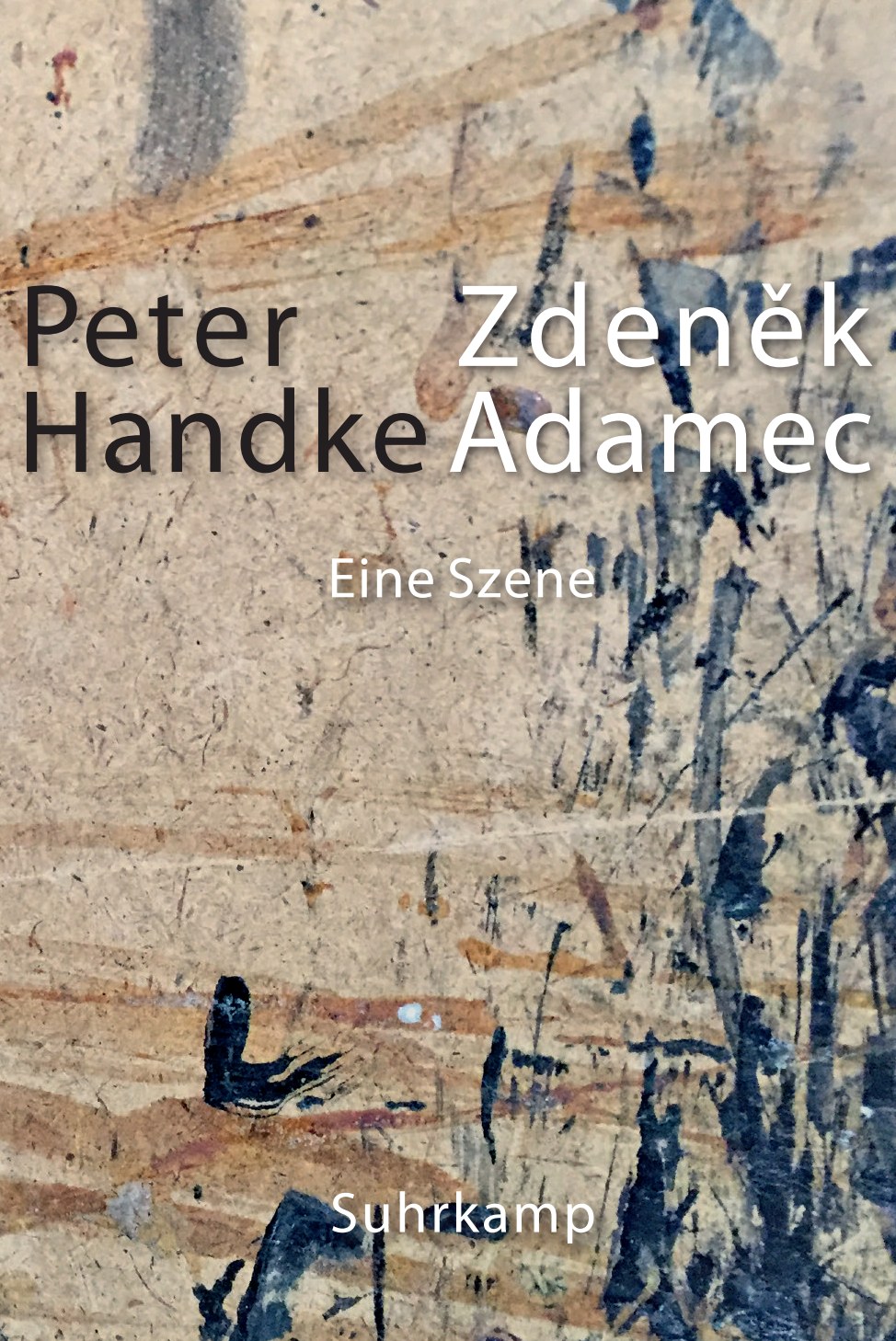
»An extensive scene«, a public place, »definitely not a free space«; possibly in the Spanish province of Avila or in Humpolec in Bohemia, now or at another time. A narrator who is one of »us« describes the place and time of the play that is to come. The actors are those left over from an originally densely populated scene: locals, newcomers, residents, foreigners, the young, the old, perhaps the last guests of a party. The drama – which they present over the course of an evening, and then a night – has already taken place: In March 2003, 18-year-old Zdenek Adamec publically burned himself on Wenceslas Square in Prague in protest against the state of the world.
A true story? »You could hunt me down with true stories. I was a prisoner of actualities long enough,« someone says. Another has conducted research and is delivering facts. How should one recount Adamec's life and death (»Research, you? Now that’s something new! «) in the face of an overly informed (or misinformed) world which has nevertheless forgotten Zdenek Adamec? How live at all when any glimpse into the world generates indignation, shame, or the desire to drop out? Handke's characters are professionals at dodging and covering things up and their most recent conversation is an easy, fast-paced series of interruptions, corrections, and corruptions; a game of questions. They describe the margins of this world theatre, dreams, anecdotes: Just as Adamec gave his father, the stonemason, a hand, but never returned the tools to their place, it’s as if a new, world-changing order could be created. »Loner« they called Adamec, or even »godforsaken«. The actors’ concern for Zdenek Adamec is moving. As is how they bring all these young people back to life with the narrative means at their disposal. Like coaches of a young team at the edge of the field they accompany Zdenek on his way with a »Scream, Zdenek! « and an »Eyes open, Zdenek!« One would almost like to believe that this play on earth is not yet lost.
»a formidable poetic event« Simon Strauß, Frankfurter Allgemeine Zeitung
»The truth that Handke offers in reply to the pounding news in his own newsroom chat is one of beauty, of language and of imagination, one of pausing for a moment, of looking and becoming aware.« Christine Dössel, Süddeutsche Zeitung
»›A scene.‹ One couldn’t put it more succinctly. But also not more free-spirited, wanting a lot, even more capable, allowing everything. […] The text fills 70 airily printed pages that one reads quickly and appreciatively.« Manuel Brug, DIE WELT
»a shimmering, exceedingly melancholic pleasure« Judith von Sternburg, Frankfurter Rundschau
»Handke asks us to look closely, to think, to get an idea and make sense of what is shown and said. He invokes the power of the word, the possibilities of art. It is a loud lament for the dead and a quiet obituary, an unswerving summon and remembrance, merry celebration and sullen funeral, agonising oratorio and joyful renaissance, everything is open, nothing is certain.« Frank Dietschreit, rbb Kultur
»With great empathy Peter Handke constructs an exceptional memorial in honour of the loner who preferred to react to global political stupidity with irrevocable muteness.« Werner Krause, Kleine Zeitung
»This linguistic artwork is eclectic, a text reduced to the essential full of sensual impressions and refined allusions. An arc of suspense that one can hardly escape is created discreetly. Lament, chills and catharsis in small doses.« Norbert Mayer, Die Presse
»highly artistic and of subtle irony, also a pleasure for readers with sophisticated tastes.« Christian Schacherreiter, OÖNachrichten
»a formidable poetic event« Simon Strauß, Frankfurter Allgemeine Zeitung
»The truth that Handke offers in reply to the pounding news in his own newsroom chat is one of beauty, of language and of imagination, one of pausing for a moment, of looking and becoming aware.« Christine Dössel, Süddeutsche Zeitung
»›A scene.‹ One couldn’t put it more succinctly. But also not more free-spirited, wanting a lot, even more capable, allowing everything. […] The...
Persons
Peter Handke
Peter Handke, born in 1942 in Griffen, Austria, lives near Paris. His books have been translated into more than 40 languages. In 2019, he was awarded the Nobel Prize in Literature.
Peter Handke, born in 1942 in Griffen, Austria, lives near Paris. His books have been translated into more than 40 languages. In 2019, he was...