
The Lives of Books




The second part of the book is about collecting, arranging, and grouping, about the relationships between books. Who stands next to whom, how do books in a library – such as those in Suhrkamp’s iconic Bibliothek Suhrkamp – speak to each other, creating a »good neighbourhood«, to borrow a term from Aby Warburg. Who comes up with these neighbourhoods? What are labyrinthine libraries? What would make a good travelling library? Why are libraries destroyed? What are the pros and cons of digital libraries?
The authors gathered together in this volume – from the fields of art, literature, philosophy, sociology, legal studies, and neuroscience – explore the material, political, and anthropological origins of books and the diverse forms of their potentially inexhaustible life.
With contributions by: Carolin Amlinger, Juri Andruchowytsch, Hannes Bajohr, Joanna Bator, Fritz Breithaupt, Sophie Calle, Ann Cotten, Philippe Descola, Friedrich Forssman, Rainald Goetz, Durs Grünbein, Maren Kames, Maylis de Kerangal, Ozan Zakariya Keskinkiliç, Susanne Lange, Ben Lerner, Steffen Mau, Steffen Martus, Kateryna Mishchenko, Christoph Möllers, Marion Poschmann, David van Reybrouck, Carlos Spoerhase, András Visky, and Maxim Znak.
OTHER PUBLICATIONS

Once Is Never Enough
Do you remember your first kiss? Our first experiences may have been terribly embarrassing, maybe clouded in our memory, yet they mark a beginning. Everything afterward becomes repetition. To be...
Italy (Castelvecchi), Hungary (Typotex)
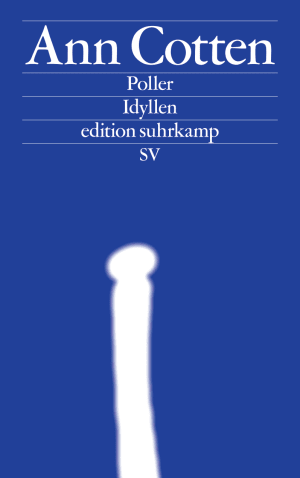
Bollards

Destructive Desires
English world rights (Princeton UP), Czech Republic (Alarm)

Son of a Dog
ZDF »aspekte« Literary Prize 2025
»This novel will break your heart – and yet, it makes you want to love like Zeko does, just once in your life.« Mithu Sanyal
This...UK & ANZ (arboretum books), Spanish rights (Argentina: Selva Canela), Brazilian Portuguese rights (Ercolano), France (Le Nouvel Attila)
Domestic rights sales: German Audiobook (Audiolino)

The Winter Swimmer
Thekla swims in open waters, even when temperatures are icy. She views it as a full-body cognitive process. In this wintry landscape, she tries to get to explore the depths of her self, and of the...
Domestic rights sales: German Audiobook (Der Diwan)

Unity Without Equality
Japan (Hakushuisha), Greece (Motibo/Topos)
Domestic rights sales: German Audiobook (Lagato)

Half Pigeon Half Peacock
I am surrendered to the white, as the white is surrendered to me. Here I am exposed to fear; here, fear is exposed.
A self finds itself, on »Sunday morning, half past seven, on the shores with the great crested grebes«. From here, a landscape is surveyed, whose contours only become clear through speaking and walking. Like floes, texts emerge from the whiteness. They...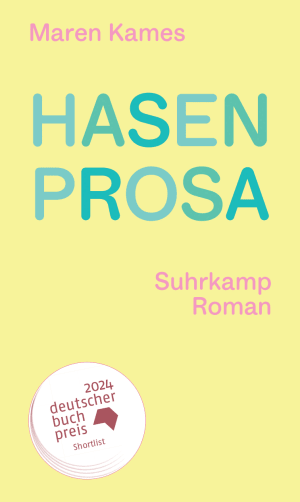
Hare Prose
»If that's all there is, I’m moving out!« someone yells and heads off in their seven-league boots and their travel socks. A hare in the back seat. We travel straight through time, through the ages, and out into pitch-dark outer space. In a hand-drawn plane through the sky and through...

The Price of Our Freedom
»They belong to us, they are one of us and we want them in« – Yuri Andrukhovych had been waiting for this sentence, which presented the prospect of EU membership to his country, for many years. It was uttered in Brussels, three days after Russia’s invasion of Ukraine. »A deep exhale – amidst the blaring sirens.«
Twenty years ago, his brilliant volume of essays My Final...

The Comet
»Now they were all mere playthings in the grasping arms of a state order such as had never existed before. An order that could only be destroyed from the outside by lightning and...
English world rights (Seagull), Chinese simplex rights (Shanghai People's Publishing House), Italy (Einaudi), Sweden (Ersatz)



Chorus of the Erinyes
Her husband left the house in a hurry without further explanation. A friend from childhood days turns up unexpectedly, and her usually reserved mother suddenly wields a mysterious power. Mathilda,...
Denmark (Forlaget Klara W.)

Ancestral Destructions
Is it the ancestors that are making the air heavy, crowding around the island? In the form of people, clouds, winds, fish, birds of the mountains, birds of the coast, migratory birds and seabirds that come to Hawaii to flirt, lay eggs, rest and then retreat back to the open sea?
Ancestral Destructions deals with the narrator's spiritual and material prehistory: that is...
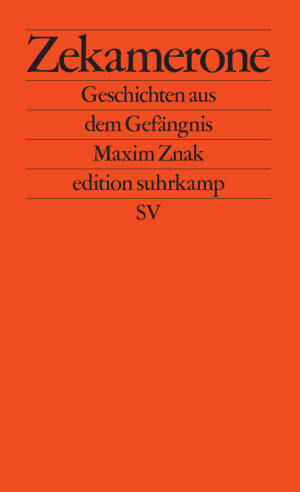
The Zekameron
In a world shrunk down to the size of a prison cell, every detail becomes important: the cockroach doing its job, the mousetrap that can be used to kill time, the strange rhythms of the collective...
UK (Scotland Street Press), Denmark (Forlaget Underskoven), Sweden (Ersatz), Poland (KEW)
Domestic Rights Sales: German audiobook (Speak Low)

Offended Freedom
COVID deniers with flower necklaces, artists questioning scientific findings, journalists staging themselves as rebels against alleged gags: Libertarian authoritarians have found their way...
English world rights (Polity), Korea (Eco Livres)

Equidistance
English world rights (Seagull)

The Narrative Brain
English world rights (Yale UP), Spanish world rights (Sexto Piso), Chinese simplex rights (Posts & Telecom Press), Italy (Lit/Castelvecchi), Korea (Eco-Livres), Hungary (Typotex), Bulgaria (Funtasy)

Writing

Radio Night
»I have always dreamt of writing a novel that has a sound,« says Yuri Andrukhovych, who has spent his life singing, rehearsing with his band and playing countless concerts. His latest work...
English world rights (NYRB), Spanish world rights (Acantilado), Brazilian Portuguese rights (Editora Zain), France (Noir sur Blanc), Poland (Czytelnik), Slovak Republic (N Press), Hungary (Helikon), Bulgaria (Paradox), Romania (Trei), Croatia (Fraktura), Slovenia (Mladinska Knjiga)

For the Dying Calves
In his four Lord Weidenfeld Lectures held in Oxford in 2019, poet Durs Grünbein deals with a topic that has occupied his mind ever since the moment he started to perceive his own position...
English world rights (Seagull)

Nimbus
Nimbus, the dark cloud, is a manifestation of momentum, splendour, vastness, and yet it belongs to the realm of the amorphous, impalpable. It takes effect, it determines the atmosphere, at the...
Spanish world rights (Tresmolins), Italy (Del Vecchio)

Lütten Klein
Steffen Mau grows up in the 1970s in Lütten Klein, a neighbourhood of newly constructed residential buildings in Rostock. When the Berlin Wall falls, he is serving with the National People’s Army,...
France (MSH), Japan (Misuzu)

Lyophilia
Ann Cotten has grown up, a fact that catapults us somewhat into the future. She claims that all she is interested in now is a constructive approach to a functioning, reasonable life for everyone (if possible). A philanthropic robot, so to speak. But her strangely labyrinthine yet overly respectful way of confronting problems still shows traces of the experiences she gathered as a young...

From the Dream (Files)
The title of a book of poetry could not be any more provocative, and still the poet allows no room for doubt: »In general, that which we call reality is greatly overestimated.«...
France (selection; 17 Muscles)
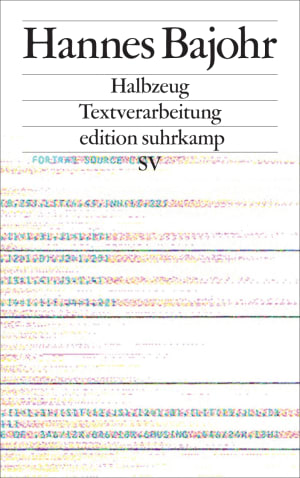
Blanks
When everything is text, because everything is code, there is no more work, only wrought material, a semi-finished product. Images, films, sounds, words – in the digital world, everything is open...
English world rights (Counterpath Press)

The Pine Islands
Gilbert Silvester, a lecturer and researcher on beard fashions in film, is in shock. The previous night he dreamt that his wife was cheating on him. In one sudden, irrational act he leaves her,...
English world rights (Serpent’s Tail), Spanish world rights (Hoja de Lata), Chinese simplex rights (People's Oriental Publishing & Media Co.), Russia (Mann, Ivanov & Ferber), Brazilian Portuguese rights (Estação Liberdade), Portuguese rights (Relogio D'Agua), France (Stock), Italy (Bompiani), Netherlands (Ambo / Anthos), Sweden (Norstedts), Denmark (Forlaget Klara W.), Norway (Cappelen Damm), Czech Republic (Paseka), Bulgaria (Vakon), Lithuania (Gelmes), Turkey (Harfa), Macedonia (Artkonekt), Montenegro (OFK Doo)
Domestic Rights Sales: German Audiobook (steinbach sprechende bücher)

Spark Plugs
Spark Plugs is a collection of 83 poems in diverse forms consisting of dream fragments, snippets of speech, prose poems, broken sonnets, and sequences that read like accident reports....
Portuguese rights (Edições do Saguão), Italy (selection; Einaudi)

The Metric We
Whether education, health or consumption: by now, data is gathered on almost every aspect of our personalities and behaviour. Step by step we are becoming a society of stars, scores, likes...
English world rights (Polity), Spanish rights/Mexico (UNAM), Chinese simplex rights (Shanghai Academy of Social Sciences Press), Czech Republic (Karolinum), Slovenia (Založba ZRC)

The Dark Sides of Empathy
Empathy is considered the basis of moral action. But if we examine this more carefully, the ability to »empathize with other people« proves itself to be a prerequisite for deliberate...
English world rights (Cornell UP), Korea (SOSO)
Previously published in the respective language / territory; rights available again: Hungary (Typotex)

Justice’s Darlings
Justice’s Darlings, these are crimes and criminals, real and alleged: Bohdan Stashynsky, for example, a KGB officer and assassin who kills the Ukrainian nationalist Stepan Bandera in his...
Spanish world rights (Acantilado), Poland (Warstwy), Bulgaria (Paradox)

Banned!
Billowing palm trees, a rustle in the celery, a tiger disappears, an atomic bomb detonates in the distance, and a consciousness starts moving backwards. The latter belongs to a TV presenter who has been banished to a deserted island due to numerous instances of grave misconduct, equipped with (as per her own choice) a knife, a grindstone and Meyers...

Borrowed Sceneries
»Borrowed sceneries« are a traditional stylistic element in East Asian garden art. A scenery beyond the gardens, often a mountian or an imposing building, is deliberately included in...
Italy (Del Vecchio)

Moon Gazing on a Moonless Night
This...

The Years at the Zoo
English world rights (Seagull), Sweden (Ersatz)
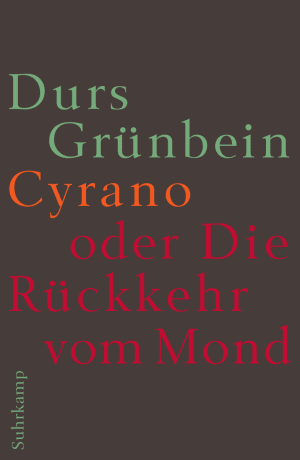
Cyrano or Returning from the Moon
What is going on? The Americans are abandoning the moon, leaving the earth’s seemingly dead companion to stragglers. Time to recapitulate: On a Sunday afternoon in Berlin, on the airfield of the disused Tempelhof Airport, poet Durs Grünbein makes a momentuous observation.
What if humanity only ever wanted to return from its adventures in space exploration? Yesterday it was the...
The Quivering Fan
»I had several lovers into whose eyes, like in tea bowls, I wanted to immerse myself...
Previously published in the respective language / territory; rights available again: Netherlands (Leesmagazijn)

Sun Position
»The sun disintegrated.«
Marion Poschmann’s long-awaited new novel is about Germany from the perspective of the grandchildren of war. A novel about the power of time, about memory and...
Bulgaria (Funtasy)

Colossus in the Fog
Durs Grünbein’s volumes of poetry are known for grasping their subjetcs in larger and larger circles, in their concentric sprawl they seem made for this age of globalisation. His new collection of poetry follows the outline of an exhibition. Works from the last five to eight years are presented in seven sections.
There are images of a journey, excursions into the unknown routine,...

Culture of the Excuse

Small Encyclopedia of Intimate Cities
Yuri Andrukhovych has invested a lot of time in familiarising himself with foreign cities. In some of them, he got stuck for a while. Others have become true parts of his life:...
Spanish world rights (Acantilado), France (Noir sur Blanc), Croatia (Fraktura)

Florida-Spaces
»Want to earn money writing? Want to disclose your most intimate thoughts?« Naturally, people reacted to our invitation in the classifieds and sent in texts. Some of them have been gathered in the...
Serbia (Kontrast)

The Vocation of Poetry
Proceeding on the observation that poetics that create norms and set benchmarks no longer existed, Grünbein traces his poetic career as a »sketch of a personal psychopoetics«.
This...
Turkey (Ketebe)
Previously published in the respective language / territory; rights available again: English world rights (Upper West Side Philosophers)

Seeing Ghosts

The Bars of Atlantis
The term »metaphor« derives from the Greek metà phérein (»to carry elsewhere«), which, in Antiquity, usually meant »by ship«, so that sea travel itself soon became a metaphor for poetry....
English world rights (FSG), Sweden (Ersatz), Albania (Aleph Klub)

Cultures of Empathy
Spanish world rights (Katz)
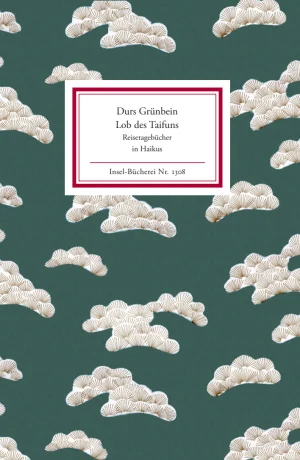
Praise of the Typhoon
Durs Grünbein visited Japan four times, in pursuit of a long elective affinity for the East that is also reflected in his works. During all of the four journeys he kept a travel journal in the...
Previously published in the respective language / territory; rights available again: France (Voix de Plumes)

The Cartesian Diver
Sweden (Ersatz)
Previously published in the respective language / territory; rights available again: English world rights (Upper West Side Philosophers)
Verses for the Day after Tomorrow
Previously published in the respective language / territory; rights available again: Italy (Einaudi)

The Secret
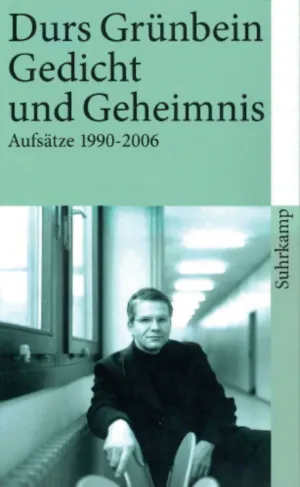
Poem and Secret
This volume contains 25 essays. It provides a chronological rip cut of Durs Grünbein‘s rich essay writing over the course of more than 15 years – from the early, much-quoted texts...
Italy (Einaudi)

Sonnets from the Dictionary of Borrowed Words
Weighed down by few associations, artificial, new, or existing in our everyday language merely temporarily – loan words seem to apologise for their existence: »I’m only fulfilling a conceptual function, occupying a job for which there’s no qualified German available at the moment.«
Could they be serious? Ann Cotten employs them in the rattling machines of thought...

Angels and Demons of the Periphery

Antique Dispositions
Porcelain
English world rights (Seagull)
The Misanthrope on Capri
The Misanthrope on Capri (a reference to emperor Tiberius) gathers Durs Grünbein’s »histories«, printed in various publications and in his own volumes of poetry – poems that mainly deal...
Previously published in the respective language / territory; rights available again: Poland (Slowo)

On Snow or Descartes in Germany
France (Greges), Sweden (Ersatz)
Previously published in the respective language / territory; rights available again: Italy (Einaudi), Greece (Keedros)

Why Live Without Writing
In the nine essays and speeches collected in this volume, Durs Grünbein circles the prerequisites, conditions and consequences of writing.
»The intimate tries to assert itself through writing,« he says, »paradoxically by exposing itself publicly. But it soon becomes clear that the public is nothing by a particularly impervious protective layer.« Grünbein lets the reader partake in...

Twelve Circles
Spanish world rights (Acantilado), France (Noir sur Blanc), Italy (Del Vecchio), Norway (Cappelen Damm), Slovenia (Cankarjeva)
Previously published in the respective language / territory; rights available again: English world rights (Spuyten Duyvil), Hungary (Gondolat), Bulgaria (Paradox), Romania (RAO), Lithuania (Lithuanian Writers), Croatia (Fraktura), Serbia (Filip Visnjic)

Declared Night
Previously published in the respective language / territory; rights available again: Italy (Einaudi), Hungary (Jelenkor)

The First Year
Previously published in the respective language / territory; rights available again: Italy (Einaudi)

My Europe
Spanish world rights (Acantilado), France (Noir sur Blanc), Italy (print edition Mimesis / digital edition GoWare), Hungary (Kijarat), Romania (Polirom)
Previously published in the respective language / territory; rights available again: Czech Republic (Periplum), Bulgaria (Lektura), Croatia (Fraktura)

The Moscoviad
Spanish world rights (Acantilado), France (Noir sur Blanc), Italy (Besa), Sweden (Ersatz), Norway (Cappelen Damm), Poland (Czarne), Lithuania (Hieronymus), Croatia (Fraktura), Slovenia (Cankarjeva), Greece (World Books), Israel (Nine Lives Press)
Previously published in the respective language / territory; rights available again: USA (Spuyten Duyvil), Russia (New Literary Review), Czech Republic (FRA), Slovakia (Kalligram), Hungary (Gondolat), Bulgaria (Paradox), Romania (Allfa), Macedonia (Makedonska Rech), Belarus (ARCHE), Georgia (Sulakauri)

My Final Territory
English world rights (University of Toronto Press), Spanish world rights (Acantilado), Hungary (Racio), Serbia (Kulturni Centar Novi Sad)
After the Satires
Previously published in the respective language / territory; rights available again: France (Petits Matins), Hungary (Jelenkor)

Perverzion
The godchild of Rabelais and Bakhtin, Bulgakov and Esterházy, it is a whirligig of forms, styles, and apocryphal traditions – an adventure for readers who view life not as...
USA (Northwestern UP), Spain (Acantilado), Russia (NLO), France (Noir sur Blanc), Italy (Del Vecchio), Finland (Loki Kirjat), Poland (Czarne), Bulgaria (Paradox), Serbia (Clio)

The Dear Dead
»Stop, wanderer, and read!«, called out the tombstones to the passers-by two thousand years ago. Inscriptions spoke of the pleasures of the deceased, of profession and merit, character...
Previously published in the respective language / territory; rights available again: Portuguese rights (Angelus Novus), Norway (Bokvennen), Japan (CHUO University Press)

Grey Area in the Mornings
Durs Grünbein notes his experience of reality in crass and direct images and propels his poems forward by the »silent turmoil« of an elegiac expressionism.
In these poems, a...
Italy (Einaudi)
Previously published in the respective language / territory; rights available again: Spanish world rights (Poesia Hidalgo), Galician (Edicions Xerais), France (L’Arche Éditeur), Czech Republic (Opus), Hungary (Jelenkor)